

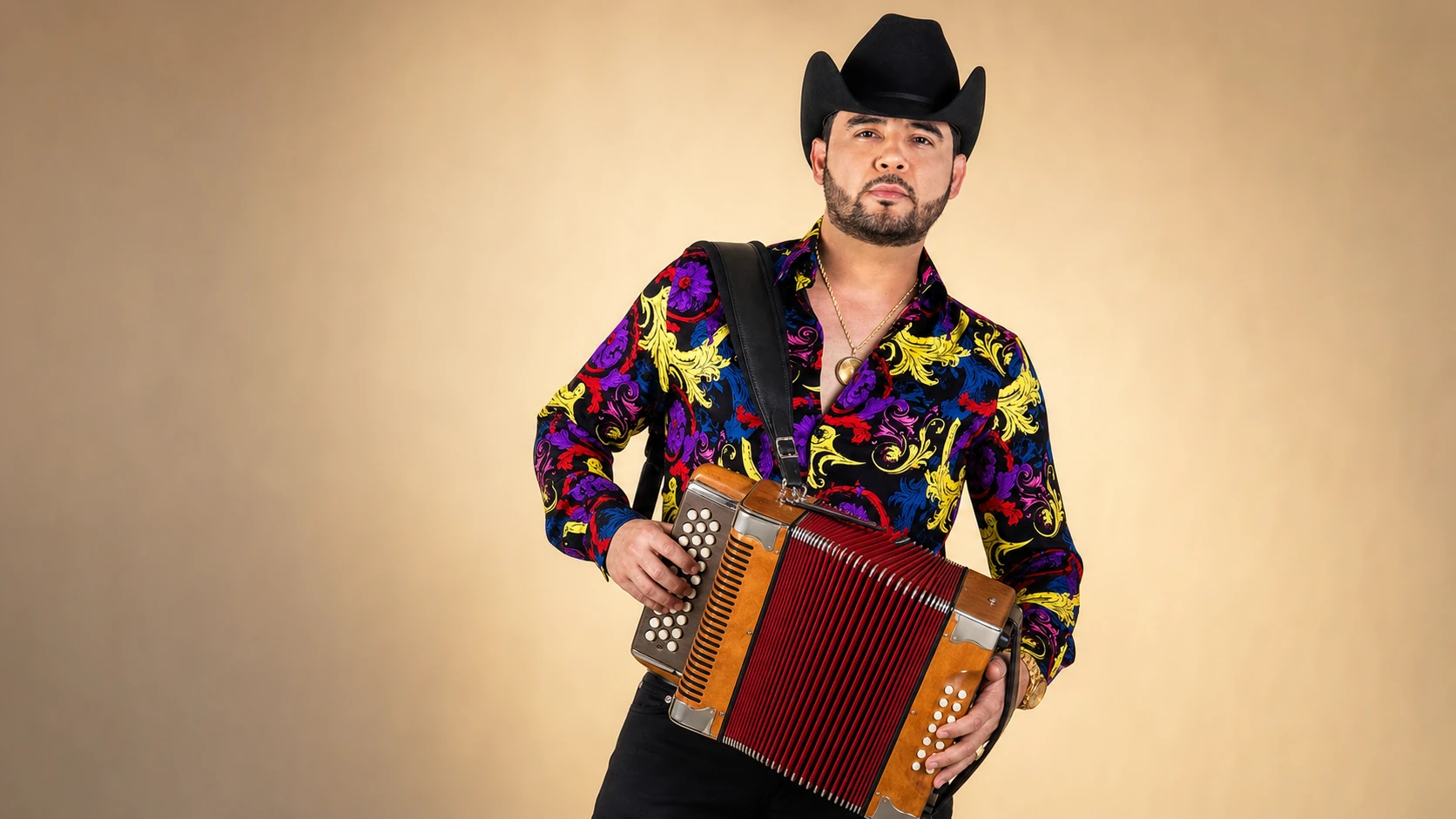
Darey Castro is the singer, accordionist, songwriter, and bandleader most closely associated with Los Dareyes de la Sierra, a long-running regional Mexican act rooted in Navojoa, Sonora. His career stretches from traditional sierreño and banda recordings to the modern corridos era, giving him an unusual place in música mexicana: he is both a veteran with major radio history and an active artist who has connected with a younger streaming audience.
Castro’s public story is shaped by survival, reinvention, and musical flexibility. He emerged from an earlier group, lived through a deadly attack that changed the direction of his career, rebuilt under the Dareyes de la Sierra name, and later found renewed attention through collaborations with Peso Pluma, Tito Double P, Xavi, Luis R Conriquez, and other current performers. His 2025 album Redención and 2026 follow-up SABIA confirmed that his return was more than nostalgia.
Some basic details about Castro remain uncertain. His exact date of birth and age have not been confirmed by a dependable primary source, and online biography pages give conflicting information. His complete family history, education, height, and personal wealth are also not publicly established. The verified parts of his life, however, offer a substantial account of a performer who has remained relevant across more than two decades of change in regional Mexican music.
Early Life and Family
José Darey Castro is closely identified with Navojoa, a city in southern Sonora, Mexico. Reliable music profiles describe him as a native of the area, although some unofficial biography sites list other locations. Navojoa provides the clearest and best-supported answer to questions about his origins.
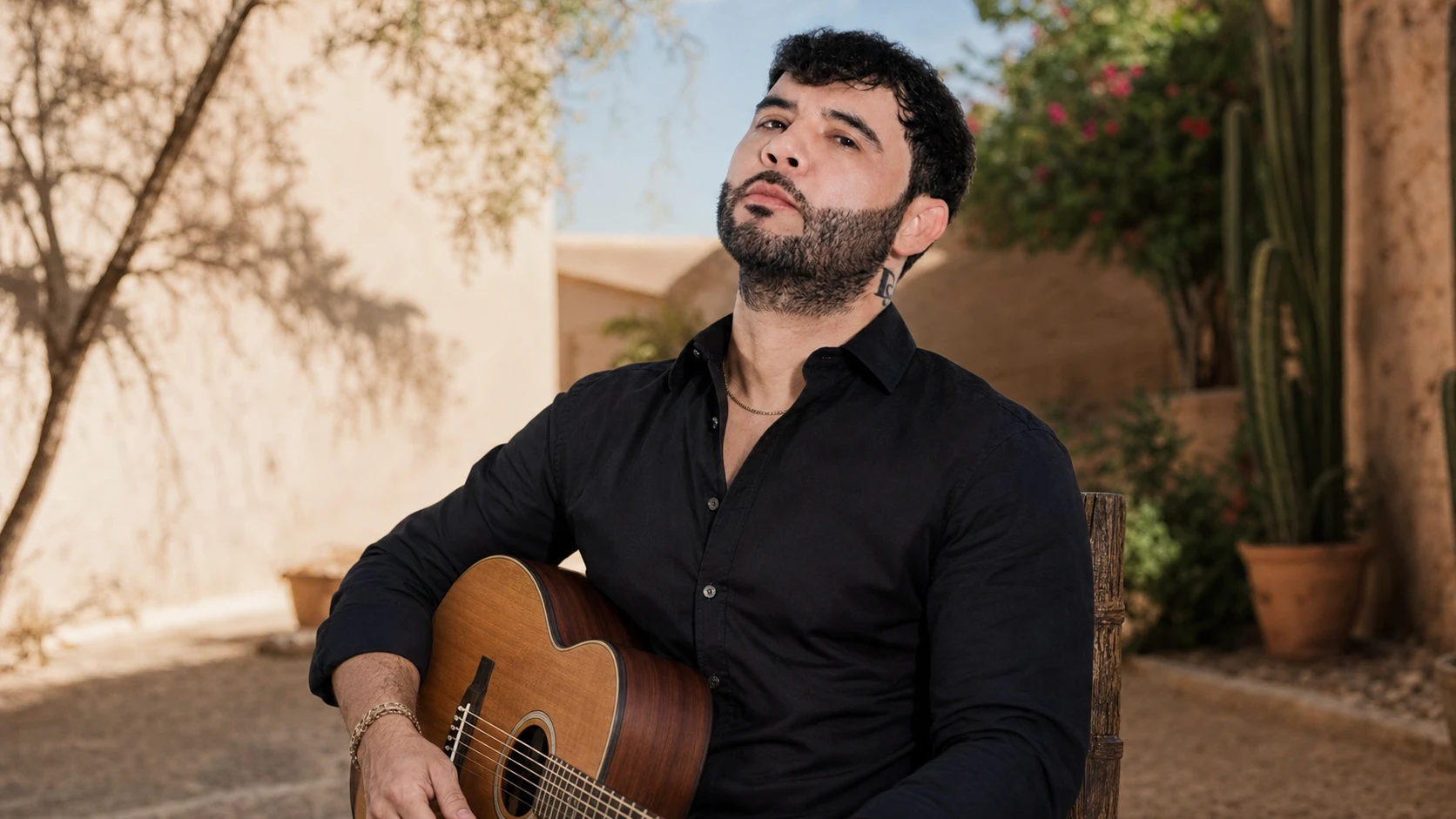
Music entered his life through his family. Castro has said that his father gave him his first guitar when he was about 10 years old. He later returned seriously to the instrument during his teenage years and began developing the skills that would support his work as a vocalist, guitarist, accordionist, and songwriter.
Few verified details are available about his mother, siblings, or extended family. Castro has generally allowed his recordings and performances to define his public image rather than building his career around personal biography. As a result, many online claims about his relatives are repeated without direct confirmation.
His exact birth date remains unclear. Several websites offer different years and different dates in April, but major interviews, label biographies, and established music platforms do not confirm one version. A responsible profile cannot state his age as settled fact.
Early Musical Ambitions
Castro developed as a regional Mexican musician before digital streaming changed the way artists were discovered. His early path depended on local performance, physical records, radio exposure, and the reputation built through live appearances. That background shaped his ability to work across several styles without losing a recognizable identity.
Before Los Dareyes de la Sierra, he performed with Los Alteños de la Sierra. Music histories trace that earlier group to Navojoa in the late 1990s, with Castro serving as its singer and leader. The group worked within the sierreño tradition, using guitars, accordion, direct vocal lines, and corrido storytelling.
The early material helped Castro establish himself in a competitive regional scene. He developed a rough, forceful voice that could carry both romantic songs and corridos. That contrast later became one of his defining strengths.
The 2004 Attack and a Career Turning Point
In 2004, Los Alteños de la Sierra were involved in a deadly attack that killed members of the group. Castro survived, but accounts differ about the exact setting, number of victims, motive, and sequence of events. The confirmed fact is that the attack ended one stage of his career and left his future uncertain.
Some retellings connect the violence to the group’s corridos, while others describe the motive as unresolved. Those claims should be treated cautiously unless supported by direct testimony or official records. Regional Mexican music has often attracted myths around performers, and dramatic details can become exaggerated as they move across fan pages and informal biographies.
For Castro, the attack became a dividing line. Rather than leaving music, he returned under a name that placed him more clearly at the center. Dareyes de la Sierra carried forward the northern Mexican identity of his earlier group while turning his own first name into part of the act’s public brand.
Building Los Dareyes de la Sierra
Los Dareyes de la Sierra began operating as a group, but Castro gradually became its defining public figure. Different musicians have supported the project across the years, while his voice, accordion, writing, and leadership have remained the constant elements.
This explains why Dareyes de la Sierra is sometimes described as a band and sometimes treated almost like Castro’s stage identity. Releases may appear under the plural group name, yet interviews and album descriptions often focus almost entirely on him. Fans searching for Darey Castro and listeners searching for Los Dareyes de la Sierra are usually looking for the same body of work.
The new act quickly built momentum. The 2005 album El Águila Real became part of the group’s early catalog, and “El Jabalí” reached Billboard’s Regional Mexican Airplay chart. Those results showed that Castro had successfully rebuilt after the attack.
His early recordings balanced corridos with songs of heartbreak and regret. “El Águila Real” strengthened his reputation as a corrido singer, while tracks such as “Sufre” and “Enséñame a Olvidar” showed his ability to reach listeners through emotional themes.
“Hasta el Día de Hoy” and Commercial Breakthrough
Castro’s defining early hit was “Hasta el Día de Hoy.” The song spent 11 weeks at No. 1 on Billboard’s Regional Mexican Airplay chart in 2008 and reached No. 3 on Hot Latin Songs. It remains one of the most important recordings in his catalog.
The song’s appeal came from its direct emotional story. Rather than relying on the danger, power, or status often associated with corridos, it focused on the memory of a failed relationship. Castro’s weathered delivery gave the song a sense of pain that connected across regional formats.
“Hasta el Día de Hoy” also reflected his willingness to move beyond a strictly sierreño arrangement. The banda setting expanded his radio reach and introduced him to listeners who may not have followed his earlier guitar-led recordings.
The success helped establish Con Banda as a major phase in his career. Castro had shown that he could change instrumentation without losing the vocal identity that listeners recognized.
Latin Grammy Recognition
In 2009, Dareyes de la Sierra released Una Copa Más. The album earned a Latin Grammy nomination for Best Banda Album at the 10th annual ceremony.
Castro did not win the award. The Latin Recording Academy’s public record lists one nomination and no wins for Dareyes de la Sierra through the period covered here. Some online biographies incorrectly call him a Latin Grammy winner, but the accurate description is Latin Grammy-nominated artist.
The nomination still marked an important level of industry recognition. It showed that Castro’s shift into banda was not only commercially effective but respected within a major awards institution.
Musical Style and Songwriting
Darey Castro’s catalog cannot be reduced to one regional Mexican style. He has worked through sierreño, norteño, banda, romantic ballads, mariachi-influenced arrangements, traditional corridos, and the newer sound associated with corridos tumbados.
His voice holds these periods together. It has a raw texture that can sound threatening in a corrido and wounded in a breakup song. He rarely approaches material with a polished pop delivery, and that roughness has become central to his appeal.
Castro is also credited as a songwriter, composer, performer, and producer. His continued involvement in the creative process helps explain why the Dareyes identity remained recognizable even as production methods and supporting musicians changed.
His lyrics have covered love, betrayal, survival, wealth, danger, alcohol, marijuana, status, and faith. Some early material addressed subjects that later became common in modern corridos, including drug references and exaggerated images of luxury.
Those songs should not automatically be treated as autobiography. Corridos may use fictional characters, commissioned stories, stylized first-person narration, or details drawn from wider culture. A lyric is not proof of Castro’s private conduct.
The Years Between Major Peaks
After the late-2000s success, Castro continued recording rather than disappearing. Dareyes de la Sierra released studio albums, live projects, compilations, and new versions of older songs across the following years.
Projects such as Sangre Guerrera, Tienes Todo, and El Principio y El Fin kept the act active through changes in the regional Mexican market. The catalog can be difficult to follow because streaming platforms sometimes mix original studio releases with compilations and repackaged material.
During this period, a younger generation began changing corridos. Streaming services, social media, and video platforms allowed new singers to gain large audiences quickly. Guitar-based corridos mixed with trap rhythms, electronic bass, luxury imagery, and shorter song structures.
Castro was well placed to adapt because he had already moved between styles throughout his career. He did not need to abandon his history to work with the newer sound. Many of the themes associated with modern corridos had appeared in his music years earlier.
Renewed Success With Younger Artists
The modern phase of Castro’s career gained attention through collaborations. In 2023, Los Dareyes de la Sierra joined Peso Pluma and Edgardo Nuñez on “VVS.” The song introduced Castro’s voice to listeners following the rapid rise of corridos tumbados.
The collaboration was not the discovery of an unknown singer. By that point, Castro already had decades of recording history, a major radio hit, and a Latin Grammy nomination. What changed was the size and age of the audience hearing him.
“Poco a Poco” with Xavi became another important bridge. Xavi’s younger, melodic style contrasted with Castro’s heavier voice, giving the track a cross-generational sound. Its large online audience showed that Castro could contribute to current hits without imitating younger performers.
That contrast became central to his return. Younger collaborators brought current attention, while Castro supplied a voice shaped by years of regional Mexican recording and performance.
Redención and Double P Records
In 2025, Los Dareyes de la Sierra released Redención through Double P Records, the label associated with Peso Pluma. The album marked Castro’s strongest return to the center of the current música mexicana conversation.
The 14-track project relied heavily on collaborations. Guests included Tito Double P, Peso Pluma, Neton Vega, Luis R Conriquez, Grupo Firme, Gabito Ballesteros, LEGADO 7, and Santa Fe Klan.
“Vita Fer” with Tito Double P became one of the album’s biggest songs and reached No. 1 on Billboard’s Mexico Songs chart. “Frecuencia” also became a strong commercial result, reaching the upper section of the Mexico Hot 100 and entering the United States Hot 100.
The album title suggested redemption, but Castro had not stopped working. The real comeback involved renewed commercial attention and acceptance by a generation that had not followed his early career.
A deluxe edition expanded the project to 28 tracks. The large release reflected the current streaming market, where more songs create more opportunities for playlist placement and individual breakouts.
First Official United States Tour
In August 2025, Dareyes de la Sierra began the Redención Tour, promoted as the act’s first official United States headline tour. The run included 20 dates and visited cities such as Los Angeles, Las Vegas, Chicago, Boston, Brooklyn, Atlanta, Houston, Dallas, Seattle, and Portland.
The wording did not mean that Castro had never performed in the United States. He had appeared at American events earlier in his career. The 2025 tour was different because it was an organized multi-city headline run under the Dareyes name.
The concerts allowed him to combine the new catalog with older songs. That balance was important because his audience now included both longtime listeners and fans who first encountered him through recent collaborations.
Touring also provided a stronger test of his renewed popularity than streaming alone. A viral song can create short-term attention, but a headline tour requires audiences to connect directly with the artist’s name and full catalog.
SABIA and His 2026 Status
Castro followed Redención with SABIA, released in April 2026. The 21-track album continued his work with Double P Records but placed less emphasis on famous guest appearances.
That shift mattered because Redención had been built around collaboration. SABIA tested whether the renewed audience would stay for Castro’s own voice and songwriting rather than only for younger stars.
Tracks such as “MATCHA,” “MALDITO INFIERNO,” “PARADISE,” “MAHOMA,” and “DESCONTROL” continued the modern corrido direction. Videos and digital promotion supported the release as Dareyes de la Sierra maintained a large streaming audience.
By mid-2026, Castro was no longer being presented only as a veteran making a comeback. He was an active artist releasing new work, drawing millions of monthly listeners, and participating directly in the current regional Mexican market.
Marriage, Children, and Private Life
Darey Castro has kept much of his family life outside his music career. In May 2026, Sara Sánchez publicly announced the end of their relationship and described it as a marriage.
Sánchez made allegations about infidelity and referred to another partner. Those statements remain her account of the breakup and should not be treated as independently proven facts. Initial reporting said Castro had not publicly responded at that time.
The pair share a daughter identified publicly as Aislinn. Reports said they intended to remain committed to parenting her after the separation.
Some websites claim Castro has additional children, previous marriages, or a confirmed new partner. Reliable public documentation for a complete relationship history is limited, so those details should not be presented as settled fact.
Net Worth and Income Sources
Darey Castro’s net worth is not publicly confirmed. Websites that give exact figures generally do not provide financial records, reliable business reporting, or a clear calculation method.
His likely income sources include music streaming, songwriting and publishing royalties, live performances, touring, recording agreements, video revenue, and merchandise. A long catalog may also produce ongoing income when older songs continue attracting listeners.
Gross concert revenue or total streams cannot be treated as personal earnings. Labels, publishers, managers, promoters, musicians, production costs, taxes, and other expenses affect how much an artist keeps.
The accurate conclusion is that Castro has built a commercially successful career, especially during his first radio peak and recent streaming resurgence. Any precise net-worth figure remains an estimate rather than a verified fact.
Public Image and Reputation
Castro’s public image rests heavily on resilience. The story of surviving a deadly attack and rebuilding his career gives his work a personal weight that goes beyond chart performance.
He is also respected for adapting without dismissing younger artists. Rather than presenting modern corridos as a threat to his generation, he collaborated with performers who grew up in a different industry and found a place within their audience.
Older fans may associate him with “Hasta el Día de Hoy,” banda arrangements, and traditional corridos. Younger listeners may know him through “VVS,” “Poco a Poco,” “Vita Fer,” “Frecuencia,” Redención, or SABIA.
That split identity is one of his strengths. Castro can draw from a deep catalog while continuing to release music that belongs to the present.
Frequently Asked Questions
Who is Darey Castro?
Darey Castro is a Mexican singer, songwriter, accordionist, producer, and bandleader. He is the central figure behind Los Dareyes de la Sierra, a regional Mexican act associated with sierreño, norteño, banda, romantic songs, and modern corridos.
What is Darey Castro’s real name?
His full professional name is generally given as José Darey Castro. He is widely known simply as Darey Castro and performs through the Los Dareyes de la Sierra identity.
How old is Darey Castro?
His exact age is not publicly confirmed by a dependable primary source. Online biography pages give conflicting birth years and dates, so a precise age should be treated as unverified.
Where is Darey Castro from?
He is most reliably associated with Navojoa, Sonora, Mexico. Major music profiles identify Navojoa as his hometown or place of origin.
What is Darey Castro’s most famous song?
“Hasta el Día de Hoy” is his defining early hit. It spent 11 weeks at No. 1 on Billboard’s Regional Mexican Airplay chart in 2008. Recent listeners may also know “VVS,” “Poco a Poco,” “Vita Fer,” and “Frecuencia.”
Did Darey Castro win a Latin Grammy?
No. Dareyes de la Sierra received one Latin Grammy nomination for Una Copa Más in 2009, but the act did not win.
Is Darey Castro married?
Sara Sánchez announced their separation in May 2026 and described their relationship as a marriage. They share a daughter, but Castro’s current relationship status has not been reliably confirmed.
Conclusion
Darey Castro’s career has lasted because he has never treated one sound as the only acceptable version of regional Mexican music. He moved from sierreño roots to banda radio, survived a violent turning point, and later entered the modern corridos era without hiding the years behind him.
His recent success is not simply a comeback built on old memories. Redención connected him with younger stars, while SABIA placed his own voice back at the center. The two albums showed that his audience could expand without erasing the catalog that first established him.
Important parts of his private biography remain unconfirmed, including his exact age, full family history, and net worth. Those gaps should be left open rather than filled with repeated online guesses.
What is clear is that Darey Castro has become a rare cross-generational figure in música mexicana. His story matters because it shows how survival, experience, and a willingness to change can keep an artist relevant long after an early career peak.