

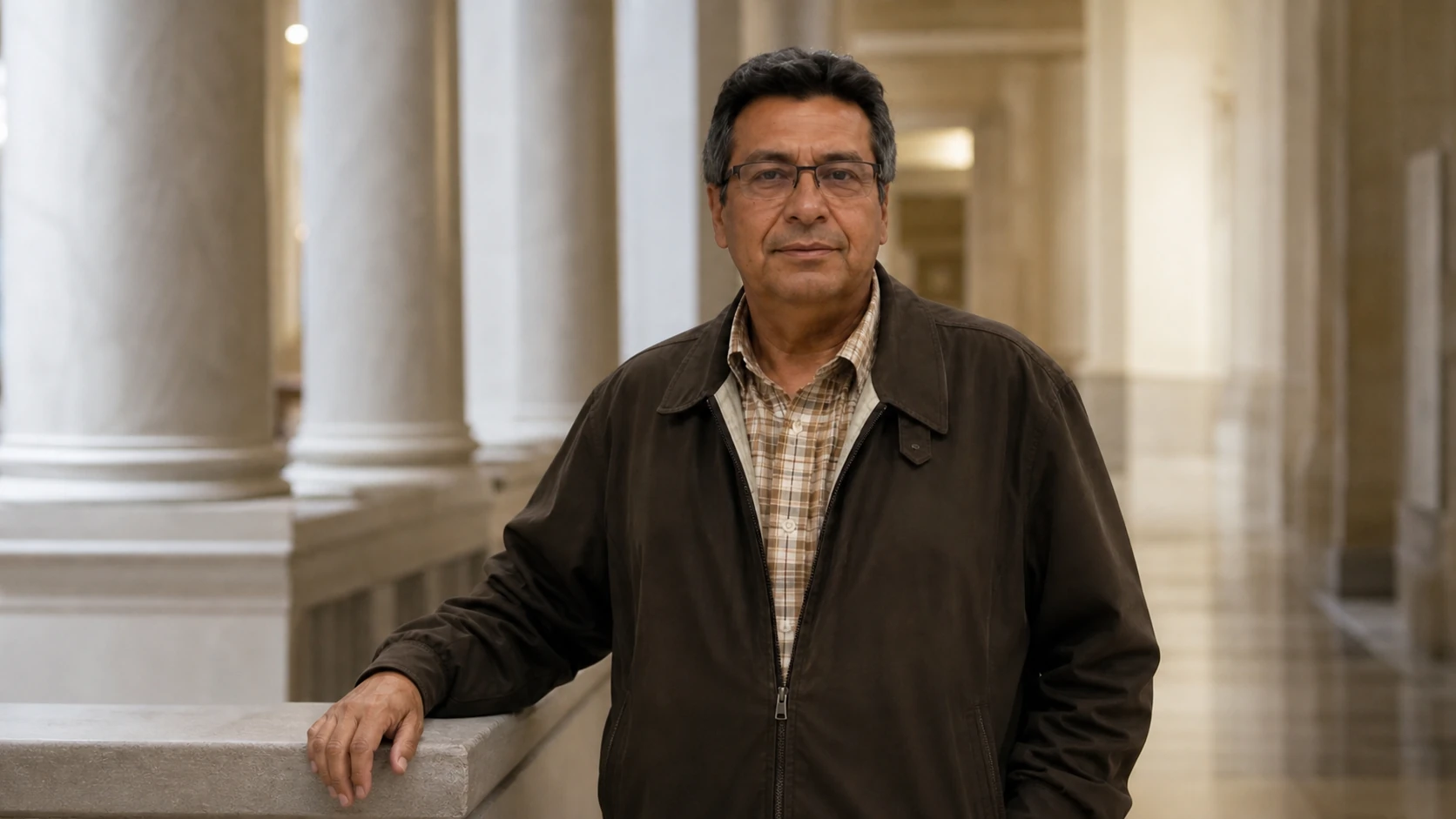
Eduardo Tamayo Barrena is a Spanish lawyer and former PSOE politician best known for his role in the 2003 Madrid political crisis that became known as the Tamayazo. Alongside fellow Socialist deputy María Teresa Sáez, he broke with the expected PSOE-IU parliamentary majority at a moment when control of the regional government depended on a single seat.
The numbers explain why the episode mattered. In the May 25, 2003 election, the People’s Party (PP) won 55 seats, the Spanish Socialist Workers’ Party (PSOE) 47 and United Left (IU) nine. The PSOE and IU therefore held 56 seats combined, one more than the PP. When Tamayo and Sáez did not take part in the Assembly’s constituent-session vote on June 10, that expected majority ceased to function.
The result was a political deadlock that led to investigations, failed government formation and a repeat election. Tamayo has always maintained that his actions reflected political disagreement with the PSOE’s arrangements with IU. Allegations that he had received money or outside inducements were widely debated, but they were never conclusively established.
Key takeaways
- Eduardo Tamayo Barrena was a lawyer and regional PSOE politician who entered the Assembly of Madrid in 1999.
- He became nationally known after he and María Teresa Sáez broke with the expected PSOE-IU majority in June 2003.
- The May 2003 election left the PP with 55 seats and PSOE-IU with a combined 56, making the two deputies’ actions decisive.
- Allegations of bribery or payment were investigated and disputed, but no conclusive finding established that Tamayo was paid.
- The crisis ended with a repeat election in October 2003, when the PP won an absolute majority with 57 seats.
Eduardo Tamayo profile summary
| Detail | Verified information |
|---|---|
| Full name | Eduardo Tamayo Barrena |
| Born | February 2, 1959 |
| Birthplace | Peñarroya-Pueblonuevo, Córdoba, Spain |
| Education | Law, Complutense University of Madrid |
| Profession | Lawyer and former regional politician |
| Legal career | Reportedly practiced law from 1986 to 1999 |
| Madrid Assembly career | Deputy from 1999 |
| Party in May 2003 | PSOE |
| Defining event | The 2003 Tamayazo |
| Later political vehicle | Nuevo Socialismo |
| Latest substantial direct public appearance documented in the research | RTVE interviews conducted from November 2023 and published in July 2024 |
Early life, education and legal career
Tamayo was born on February 2, 1959, in Peñarroya-Pueblonuevo, in the province of Córdoba. Contemporary reporting by El País described him as a law graduate of the Complutense University of Madrid.
He reportedly practiced law from 1986 until 1999. That legal background preceded his move into regional politics, where he became part of the PSOE organization in Madrid.
In 1999, Tamayo entered the Assembly of Madrid as a Socialist deputy. He was also involved in internal party currents and was associated with Renovadores por la Base during the Madrid Socialist federation’s internal politics around 2000.
By the time of the 2003 regional election, he was an established PSOE figure in the Assembly rather than an outsider suddenly entering public life.
The election that set up the Tamayazo
The May 25, 2003 regional election produced an unusually tight result.
The PP emerged as the largest single party with 55 seats. The PSOE won 47 seats, while IU secured nine. Together, the PSOE and IU controlled 56 of the Assembly’s 111 seats, enough for a one-seat majority.
Tamayo was elected as No. 13 on the PSOE list. The expected outcome was that the Socialists and IU would use their combined numbers to control the Assembly and support a regional government headed by PSOE candidate Rafael Simancas.
That arrangement depended on every vote.
The balance changed on June 10, when the newly elected Assembly met for its constituent session.
The June 10 rupture
Tamayo and María Teresa Sáez did not participate in the crucial vote that day. Their absence removed two votes from the expected PSOE-IU bloc and allowed PP candidate Concepción Dancausa to secure the presidency of the Assembly.
That moment became the trigger for what Spaniards came to call the Tamayazo.
The term is sometimes used only for the June 10 absence, but the political crisis extended well beyond that single session. It included the breakdown of the expected governing majority, the creation of a Mixed Parliamentary Group by Tamayo and Sáez, failed investiture proceedings, a parliamentary investigation and eventually a second election.
On June 23, Tamayo and Sáez obtained full status as deputies and formed the Mixed Parliamentary Group rather than returning to the PSOE group.
The investiture process then took place on June 27, 28 and 30. No candidate received enough support to form a government.
Madrid was left without a viable governing majority.
Tamayo’s explanation for breaking with the PSOE
Tamayo said his decision was rooted in political disagreement within the left.
His stated objection focused on what he considered excessive influence being granted to IU in the negotiations over a future PSOE-IU governing arrangement. He presented his break as resistance to his own party’s strategy rather than an act carried out for financial reward.
That explanation is documented as Tamayo’s account, but it has never settled the controversy.
Later reporting raised questions about how spontaneous the decision had been. In a 2024 investigation based in part on interviews with Tamayo, RTVE reported that a hotel room connected to him had been arranged on June 9, the day before the Assembly vote, through builder and PP member Francisco Bravo.
RTVE also highlighted pre-crisis telephone contacts involving Tamayo, Esteban Verdes and Ricardo Romero de Tejada, who was then secretary-general of the Madrid PP.
Those details have remained significant because they complicate a simple account of a last-minute political rebellion. They do not, however, prove that Tamayo was paid or that the PP directed his actions.
The bribery allegations and what the investigations found
After the rupture, the PSOE expelled Tamayo and Sáez and pursued allegations that their conduct might have involved bribery or outside interests linked to urban development.
A complaint was filed with the Madrid High Court, but the court did not admit it. That decision was confirmed in July 2003.
The Assembly of Madrid also created a parliamentary investigation commission. It held 11 sessions as lawmakers tried to determine what had happened and whether outside interests had influenced the two deputies.
The commission did not produce a definitive institutional conclusion. Its proposed report was debated on August 25, 2003 and rejected in plenary.
That distinction matters.
It is inaccurate to say that the parliamentary investigation proved corruption. It is equally inaccurate to say that it formally proved Tamayo innocent of every allegation. No adopted final report established a definitive explanation for the episode.
Tamayo has continued to deny receiving money or any reward for his conduct. In interviews published by RTVE in July 2024, he again rejected the claim that he had been paid.
The strongest evidence-led formulation is therefore straightforward: bribery and outside inducement were alleged, but they were never conclusively proven.
The repeat election and Nuevo Socialismo
With no workable government formed after the first election, Madrid voters returned to the polls on October 26, 2003.
This time, the result was decisive. The PP won 57 seats, the PSOE 45 and IU nine. The PP therefore secured an absolute majority.
Tamayo and Sáez attempted to continue their political careers through a new party, Nuevo Socialismo.
Official election records show that Nuevo Socialismo received 6,176 votes and failed to win a seat. That exact figure is notable because 6,221 has been repeatedly copied in secondary online biographies and summaries, despite not matching the certified result.
The October election effectively ended Tamayo’s role as a parliamentary power broker. His long-term public significance instead became tied almost entirely to the political rupture that had forced the repeat vote.
Legal and political aftermath
The consequences of the Tamayazo continued beyond 2003.
Tamayo and Sáez later challenged their exclusion from the Assembly’s investigation commission. Spain’s Constitutional Court rejected their application for constitutional protection in a ruling dated March 10, 2008.
That judgment concerned their parliamentary rights and the composition of the investigation commission. It did not decide whether bribery had taken place or whether Tamayo had accepted money.
The Constitutional Court judgment also contains a seat-count recital that conflicts with the certified election result. The official May 2003 figures remain 55 seats for the PP, 47 for the PSOE and nine for IU.
EFE later reported that Tamayo remained involved in politics until around 2008 and that subsequent business activity took him to Equatorial Guinea. That reporting offers some insight into his life after the Assembly, but it does not establish a current occupation.
Later public attention
Tamayo largely disappeared from frontline political life after the 2003 crisis, although his name periodically returned to the news.
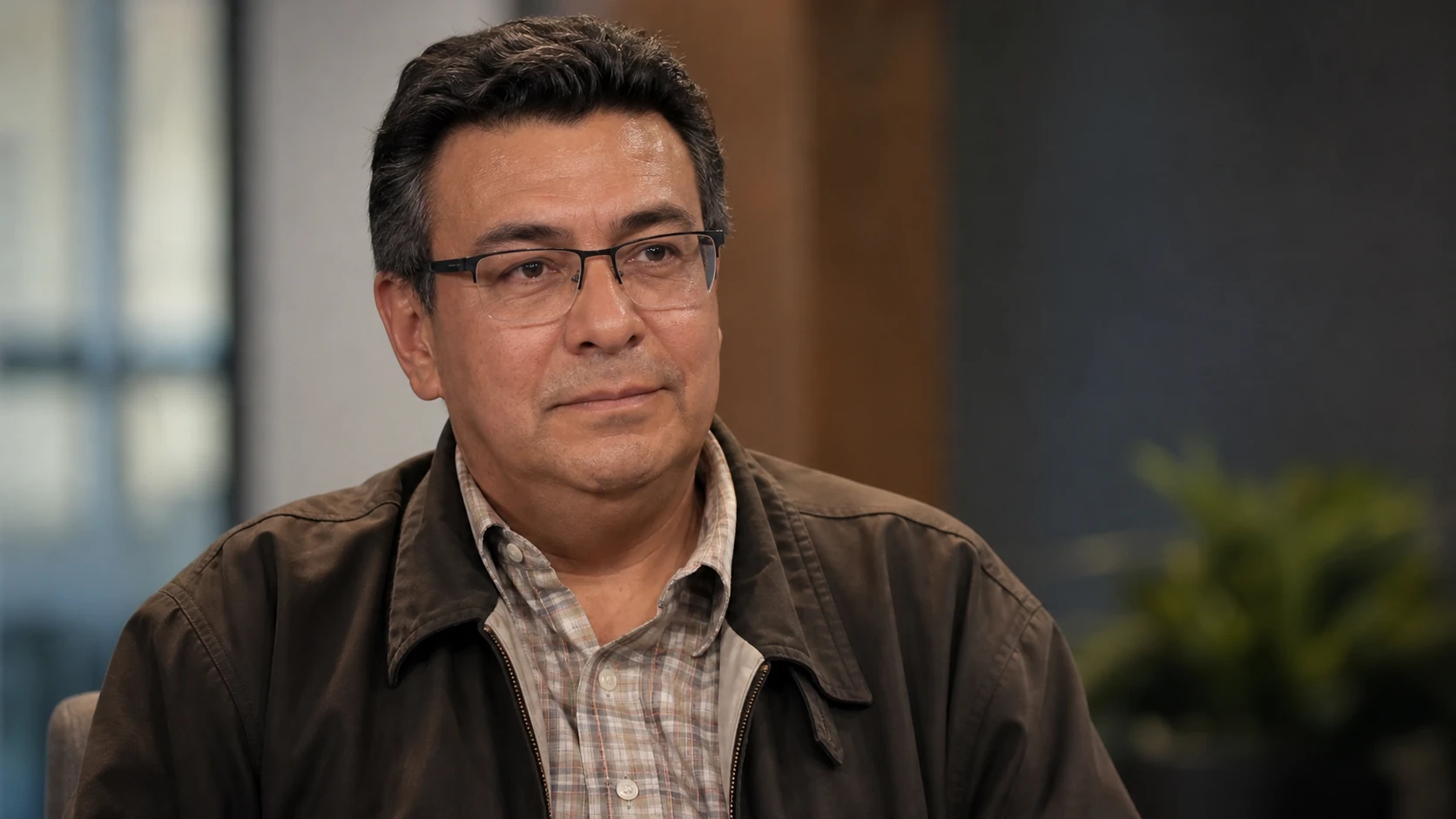
In 2020, he was investigated in Vigo in connection with an alleged extortion scheme. The case against him was later provisionally dismissed and archived, with the judge citing a lack of sufficiently solid indications of criminality. The allegation therefore should not be treated as a proven offense.
More significant for his political legacy was his decision to speak again about the Tamayazo.
RTVE met Tamayo on November 20, 2023 and went on to conduct three interviews with him. Its resulting report was published in July 2024.
In those interviews, Tamayo continued to present his conduct as a political dispute and denied receiving payment. At the same time, RTVE revisited the hotel arrangement and the network of contacts preceding the June 10 vote, keeping the unresolved questions around the episode in public view.
The lasting meaning of the Tamayazo
The word Tamayazo has survived far longer than Tamayo’s active political career.
It became shorthand in Spanish political language for the collapse of the expected PSOE-IU majority in Madrid and for the controversy over how and why that collapse occurred.
Its significance comes first from what can be measured. Before the crisis, the PSOE and IU together had 56 seats to the PP’s 55. After months of deadlock and a repeat election, the PP held 57 seats and an absolute majority.
That sequence had lasting political consequences for the Community of Madrid.
But the episode also endured because of what the public record never fully resolved. Tamayo’s own explanation emphasized internal party conflict. His political opponents alleged improper inducement. Investigations and later reporting uncovered facts that kept those suspicions alive, but no conclusive finding established that he was bribed or directed by an outside actor.
The continued interest was visible decades later. RNE produced a ten-part documentary series, Tamayazo. El pódcast, which included participation by Tamayo and Sáez. In 2025, the production won a Premio Ondas Globales del Podcast for best script, ex aequo.
The award belonged to the podcast, not to Tamayo, but it showed that the events of 2003 remained significant enough to attract renewed journalistic and public attention.
Current status
As of August 19, 2026, the latest substantial direct public appearance documented in the available research remains the RTVE interview series recorded from November 2023 and published in July 2024.
There is no comparably reliable public evidence establishing Tamayo’s current employer, residence, business role or active political office.
His finances and private life are also not sufficiently documented for responsible reporting. No reliable basis has been established for a current net worth, salary, partner, children or detailed family profile.
That absence of evidence is especially important because the name Eduardo Tamayo also belongs to another public-facing namesake: Tulsi Gabbard’s former husband. The politician discussed here is Eduardo Tamayo Barrena, the former PSOE deputy in the Assembly of Madrid.
Conclusion
Eduardo Tamayo Barrena’s place in Spanish political history rests on a single episode with unusually large consequences.
He entered the 2003 Madrid election as a PSOE deputy in a chamber where the left held a one-seat combined majority. His break with the expected Socialist-IU bloc, together with María Teresa Sáez, helped prevent that majority from functioning, contributed to a failed investiture process and ultimately led to a repeat election in which the PP won an absolute majority.
The consequences are clear. The motive is not.
Tamayo has consistently denied receiving payment and has framed his actions as a political dispute within the left. Allegations of bribery and outside influence were investigated and debated but never conclusively proven.
That unresolved gap between documented effect and uncertain motive is the reason his name remains attached to one of the most enduring controversies in modern Madrid politics.