

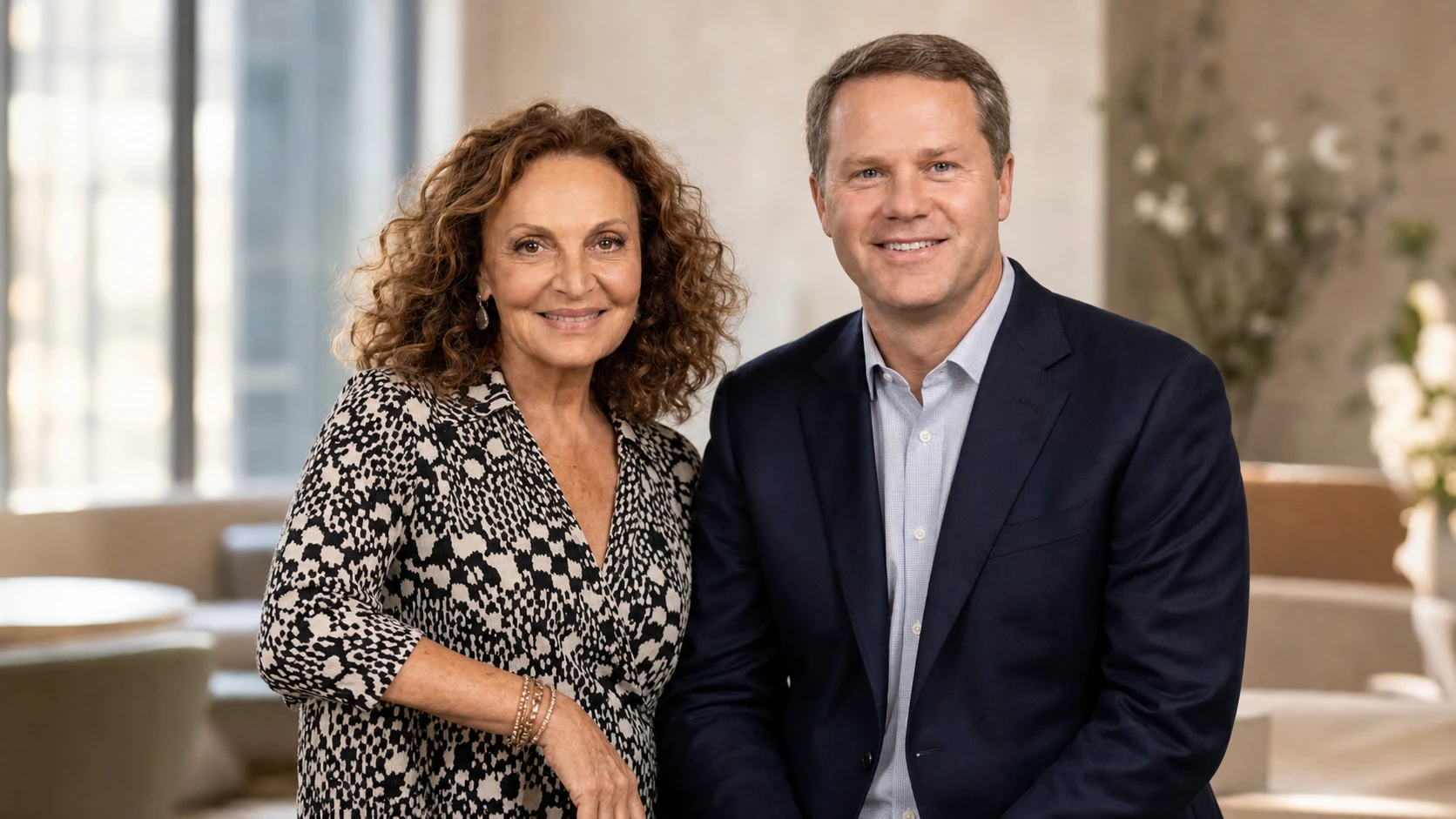
There is no authoritative public evidence that Diane von Furstenberg and Doug McMillon are relatives, romantic partners, or formal business partners. Their names sometimes appear together in searches because both are prominent figures in the broader retail economy, but the documented record shows two distinct careers: von Furstenberg built an influential fashion brand around her signature wrap dress, while McMillon spent decades at Walmart before serving as the company’s president and CEO from 2014 through January 31, 2026.
The apparent overlap can be misleading. Diane von Furstenberg-branded merchandise has appeared on Walmart.com, but a product listing on a retail platform does not demonstrate a direct collaboration between the designer and McMillon. The well-documented mass-retail partnership involving von Furstenberg in recent years was instead an exclusive collection with Target in 2024.
As of August 19, 2026, von Furstenberg remains active in the fashion world as her namesake brand enters a new creative phase. McMillon is no longer Walmart’s CEO or a member of its board, although Walmart’s filed transition terms provide for him to remain with the company through January 31, 2027.
Key takeaways
- No authoritative evidence establishes a family, romantic, or formal business relationship between Diane von Furstenberg and Doug McMillon.
- Von Furstenberg founded the DVF fashion business in 1972 and popularized her signature wrap dress beginning in 1974.
- McMillon joined Walmart as an hourly associate in 1984 and became president and CEO of Walmart Inc. in February 2014.
- His CEO tenure ended on January 31, 2026, with John Furner succeeding him on February 1.
- DVF merchandise appearing on Walmart.com should not be mistaken for evidence of a direct partnership with McMillon or Walmart.
Diane von Furstenberg and Doug McMillon profile summary
| Fact | Verified detail |
|---|---|
| Diane von Furstenberg | Belgian-born fashion designer, entrepreneur, author and philanthropist |
| Birth | Brussels, 1946 |
| DVF founded | 1972 |
| Signature work | Her version of the wrap dress, introduced and popularized from 1974 |
| Fashion leadership | Former president and later chair of the Council of Fashion Designers of America |
| Philanthropic work | Co-founded the DVF Awards in 2010 |
| Doug McMillon | Former president and CEO of Walmart Inc. |
| Walmart start | Hourly associate in 1984 |
| Education | Bachelor’s degree in accounting from the University of Arkansas; MBA from the University of Tulsa |
| Walmart CEO tenure | February 2014-January 31, 2026 |
| Successor | John Furner |
| Current Walmart status | Transition role scheduled through January 31, 2027 |
| Documented relationship | No personal, family, romantic, or formal business relationship established |
The documented relationship between them
The public record does not establish a personal or family connection between von Furstenberg and McMillon. It also does not show a formal business partnership between the two.
That conclusion needs a careful boundary. An absence of documented evidence is not proof that they have never met, attended the same event, or crossed paths privately. Those broader claims cannot responsibly be made from the available record.
What can be said with confidence is that their public careers developed separately. Von Furstenberg built her reputation through fashion design and entrepreneurship. McMillon rose through the management ranks of Walmart and became one of the most prominent corporate executives in global retail.
Von Furstenberg’s publicly documented husband is media executive Barry Diller, further undercutting any suggestion that the pairing of her name with McMillon’s reflects a marital relationship.
Why fashion and Walmart can create confusion
The most visible point of overlap is retail distribution. Walmart.com has carried Diane von Furstenberg-branded merchandise, including apparel and eyewear. Some listings have been resale, pre-owned, or marketplace-style offerings.
That matters because modern retail platforms frequently sell products through third-party merchants and other channels. The presence of a brand on a retailer’s website does not, on its own, establish a personal relationship between the brand’s founder and the retailer’s chief executive.
A genuine designer-retailer collaboration involving von Furstenberg was publicly announced in February 2024 by Target. The Diane von Furstenberg for Target collection was developed with von Furstenberg and her granddaughter Talita. Target said the range contained more than 200 pieces, launched on March 23, 2024, began at $4, and priced most items below $50.
That distinction is important. A documented collaboration normally produces an official announcement and clear information about the participating companies and designers. No comparable authoritative record establishes a Diane von Furstenberg-Doug McMillon partnership.
Diane von Furstenberg’s path into fashion
Diane von Furstenberg was born in Brussels in 1946. She later became one of the most recognizable names in American fashion, but her early training included exposure to the technical side of textile production.
Biographical references report that she studied economics at the University of Geneva. Her company’s own history says she later worked with Italian textile manufacturer Angelo Ferretti in Como, where she learned about fabric, printing, and manufacturing.
That experience provided practical knowledge that preceded the launch of her own fashion business.
Von Furstenberg founded DVF in 1972. Within a few years, one garment had come to define both her name and the emerging brand.
The wrap dress and the rise of DVF
Von Furstenberg’s signature wrap dress emerged in 1974 and became one of the best-known garments of the decade.
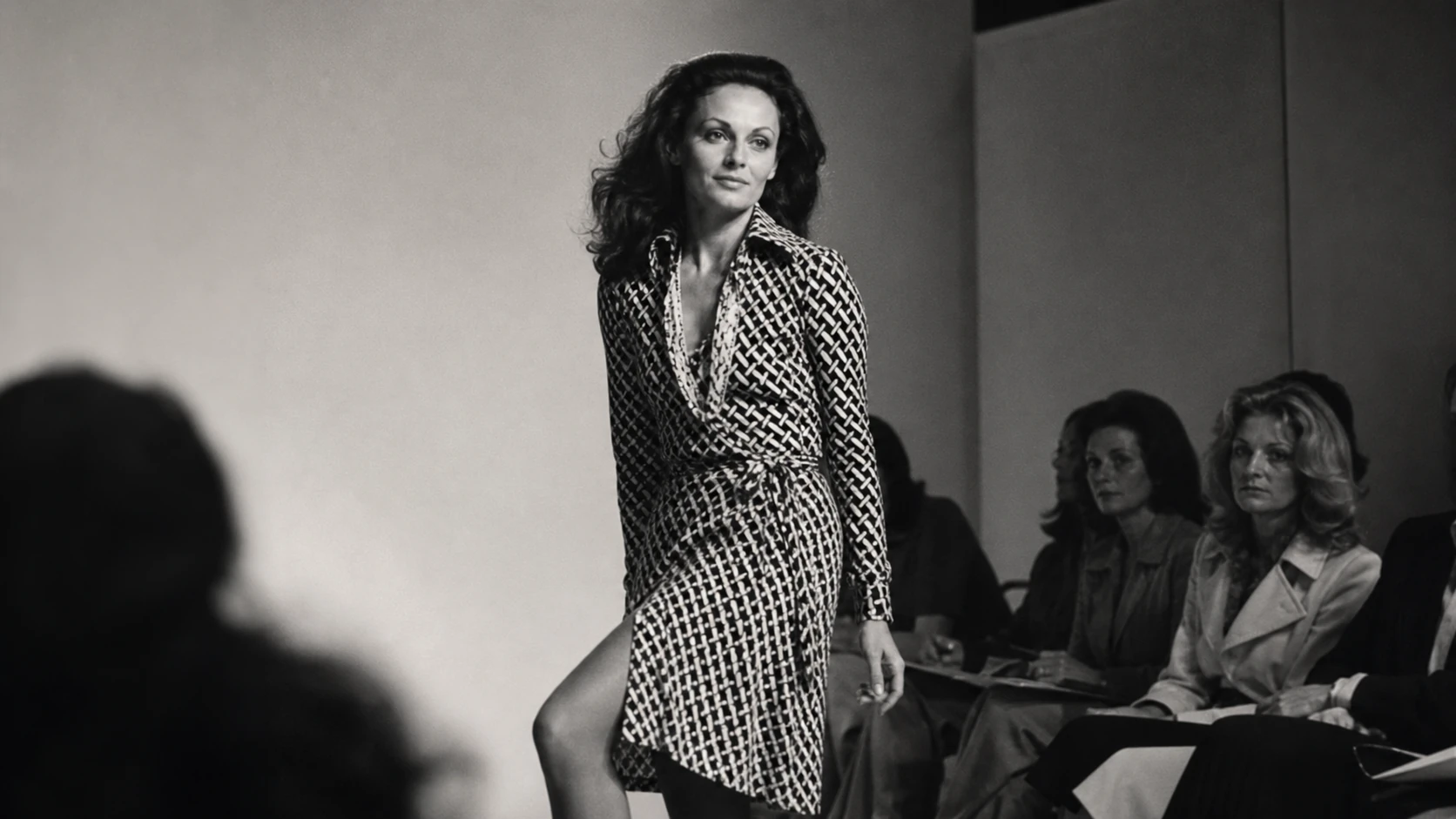
Its importance should be described precisely. She did not invent the general idea of a wrap garment. The Metropolitan Museum of Art places wrap construction within an earlier tradition of American sportswear. Von Furstenberg’s achievement was to create and popularize a version that became closely identified with her and with the changing style of women’s fashion in the 1970s.
The dress also gave the DVF label an unusually durable visual identity. Rather than remaining an artifact of a single fashion season, it became the garment most associated with von Furstenberg’s career and repeatedly returned as a reference point for the brand.
Her business eventually grew beyond the original dress, but its influence remained central to the story of DVF.
Fashion leadership and public impact
Von Furstenberg’s role in fashion later expanded beyond running her own company.
In 2005, she received the Council of Fashion Designers of America’s Geoffrey Beene Lifetime Achievement Award. She was elected president of the CFDA in 2006 and later became its chair, giving her a formal leadership position within one of the central institutions of American fashion.
Her work also received broader recognition. In 2019, she was inducted into the National Women’s Hall of Fame, which cited both her professional achievements and her wider public work.
Von Furstenberg has also built a philanthropic profile centered on women’s leadership and social causes. In 2010, she and the Diller-von Furstenberg Family Foundation established the DVF Awards, which recognize women working on social issues and support their efforts through grants.
The awards became a recurring part of her public identity, showing how her later career extended beyond design into institutional leadership and philanthropy.
A new creative phase for DVF
The DVF company has continued to evolve long after the wrap dress first made von Furstenberg famous.
In 2024, Vogue Business reported that the company was bringing operations back in-house after several years in which some functions had been outsourced. Chief executive Graziano De Boni was overseeing that transition.
Another important change came on May 27, 2026, when Vogue reported that Henry Zankov had been appointed artistic director of Diane von Furstenberg. His responsibilities included the collections and the visual identity of the brand. His first presentation in the role was expected during New York Fashion Week in September 2026.
The label remained commercially active during this transition, with its official store carrying a Summer 2026 collection.
Von Furstenberg herself was also scheduled to receive the Museum at the Fashion Institute of Technology’s 2026 Couture Council Award for Artistry of Fashion on October 22, 2026. As of August 19, that ceremony had not yet taken place.
Doug McMillon’s early Walmart career
Doug McMillon’s public story is rooted almost entirely in one company.
Walmart says he first worked for the retailer as an hourly associate in 1984, including summer work unloading trucks. He later returned to the company full-time and built a career through merchandising and management positions.
His education complemented that retail experience. Walmart states that McMillon earned a bachelor’s degree in accounting from the University of Arkansas and an MBA from the University of Tulsa.
His progress through Walmart eventually put him in charge of major operating businesses rather than moving him directly into corporate leadership.
In August 2005, he became president and CEO of Sam’s Club, Walmart’s warehouse-club division. In February 2009, he was promoted again, this time to president and CEO of Walmart International.
Those two assignments gave him experience leading large organizations within the broader company and positioned him as a candidate for Walmart’s top job.
Twelve years leading Walmart
Walmart announced in November 2013 that McMillon would succeed Mike Duke as president and CEO. He took over in February 2014.
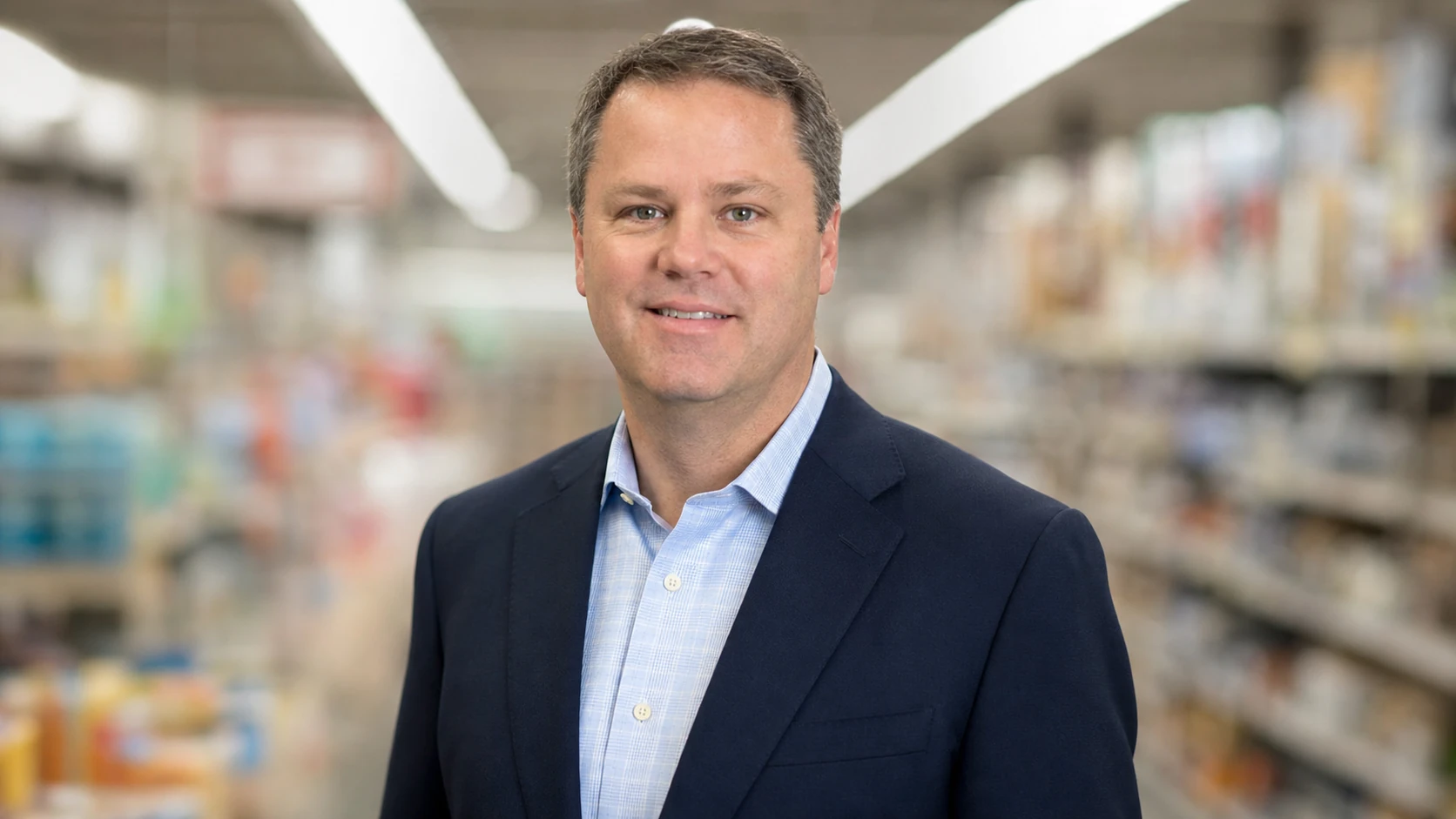
His tenure came during a period of major pressure on traditional retailers. E-commerce was reshaping shopping habits, technology was becoming more important to logistics and store operations, and Walmart faced the challenge of connecting its huge physical-store network with a stronger digital business.
Walmart credits McMillon’s years as CEO with accelerating investment in e-commerce and technology. The company also points to workforce initiatives involving wages, parental leave, and education. Those descriptions represent Walmart’s assessment of his leadership and should be understood as such.
Independent reporting provides a broader measure of the company’s scale during his time in office. When his retirement was announced in November 2025, the Associated Press reported that Walmart’s annual revenue had increased from about $485.7 billion to $681 billion over the course of his CEO tenure. The AP also reported that the company’s shares had more than quadrupled by that point.
Those figures describe Walmart’s corporate performance, not McMillon’s personal finances.
His years at the top also tracked Walmart’s continuing transformation from a business identified primarily with physical stores into one combining stores, online ordering, digital services, logistics technology, and large-scale fulfillment operations.
The transition from McMillon to John Furner
Walmart announced McMillon’s planned retirement from the chief executive position in November 2025.
His service as president and CEO ended at the close of business on January 31, 2026. John Furner succeeded him as president and CEO on February 1.
The change ended McMillon’s roughly 12-year tenure in Walmart’s top executive position, but it did not immediately end his employment with the company.
Under terms disclosed by Walmart, McMillon was to remain an executive officer after the transition, report to the company’s board chairman, and continue as a Walmart associate through January 31, 2027.
As of August 19, 2026, the precise description is therefore that McMillon is Walmart’s former president and CEO who remains with the company under a transition arrangement.
His board status after leaving the CEO role
McMillon is no longer a Walmart director.
This point requires some care because an older Walmart leadership biography contained language suggesting that he continued to serve on the board. Walmart’s later 2026 proxy materials, however, stated that he would retire from the board when his term ended in June.
At the company’s June 4, 2026 annual shareholders’ meeting, 11 directors were elected, and McMillon was not among them.
The more recent governance record therefore controls the current description: he is no longer Walmart’s CEO and no longer sits on its board, although his transition employment was scheduled to continue into early 2027.
Two different careers in the wider retail economy
Von Furstenberg and McMillon can reasonably appear in the same broad discussion of retail because both have influenced how consumer products reach the public. Beyond that level, however, their careers are fundamentally different.
Von Furstenberg built a fashion identity around design, branding, entrepreneurship, and an enduring signature product. Her later work expanded into institutional leadership and philanthropy, while the DVF label continued through changes in management and creative direction.
McMillon’s career was managerial and corporate. He spent decades inside Walmart, moving from hourly work through operating leadership before becoming chief executive of one of the world’s largest retailers.
Their professional worlds overlap structurally because fashion brands depend on retail distribution and large retailers sell fashion products. That shared commercial environment is not evidence of a personal relationship or a direct partnership.
The strongest public record instead shows two independently significant careers whose names have been paired more often by search behavior than by documented shared history.
Conclusion
Diane von Furstenberg and Doug McMillon occupy different places in modern retail history. Von Furstenberg is known for the DVF fashion business, the wrap dress she popularized beginning in 1974, her leadership in American fashion, and her philanthropic work. McMillon’s public legacy centers on a Walmart career that began with hourly work in 1984 and culminated in 12 years as the company’s chief executive.
What the evidence does not establish is just as important. There is no authoritative documentation of a family, romantic, or formal business relationship between them, and the availability of DVF-branded goods on Walmart.com does not prove one.
As of August 19, 2026, their current paths remain distinct: DVF is entering a new creative phase under artistic director Henry Zankov, while McMillon has completed his tenure as Walmart CEO and director and remains with the company only under a scheduled transition arrangement. Their documented stories are substantial on their own, without turning a search-engine pairing into a relationship the public record does not support.