

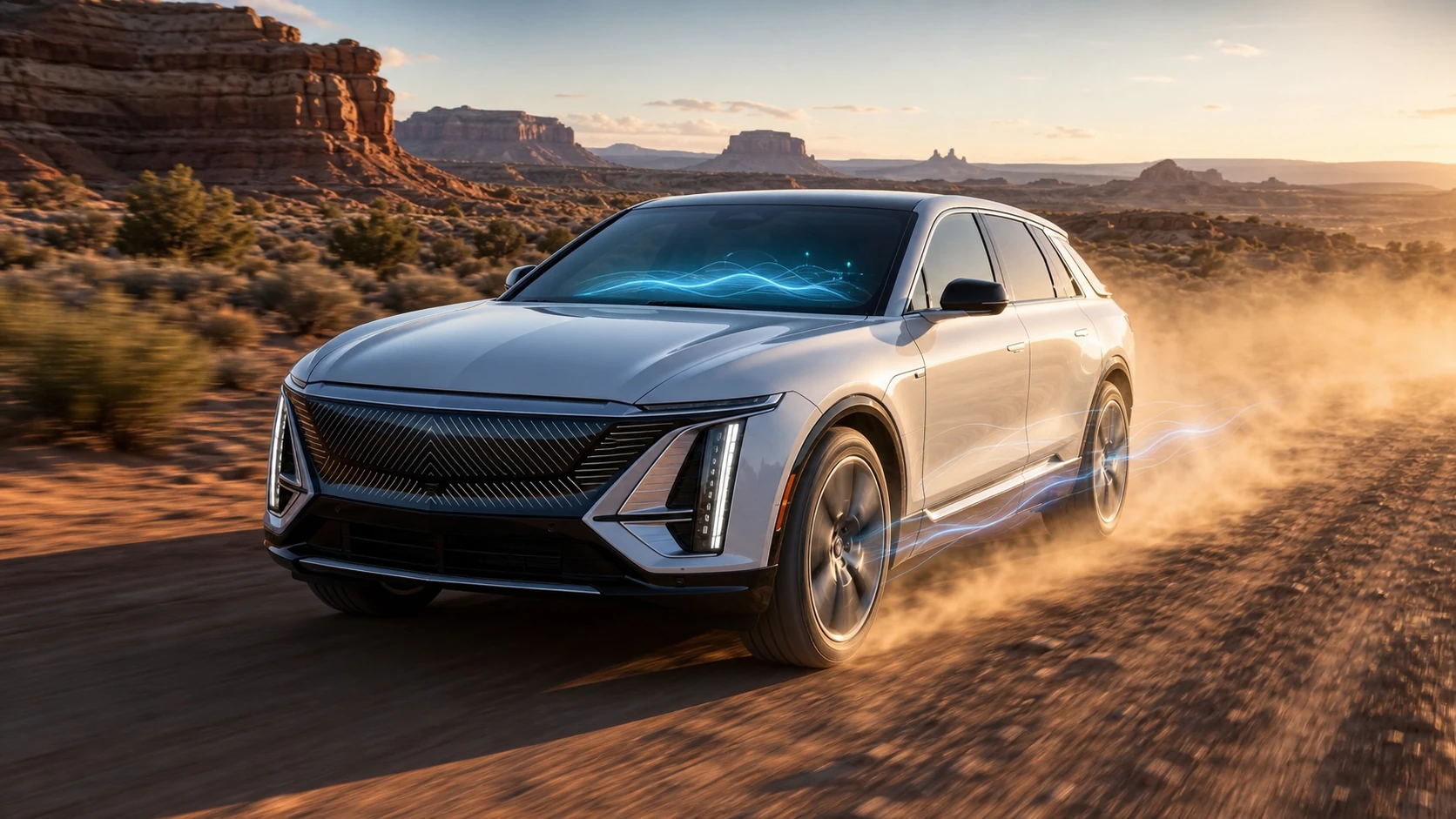
The Cadillac Lyriq’s driving modes do not create separate official driving ranges or unlock different portions of the battery. Tour, Sport, Snow/Ice and My Mode all use the same installed battery pack, and switching between them does not immediately add or remove stored energy.
What can change is how quickly the Lyriq uses that energy. Each mode adjusts parts of the vehicle’s response, including accelerator sensitivity, steering feel, braking behavior and traction management. Those changes can influence the driver’s habits, which may raise or lower real-world electricity consumption.
The main answer is simple: Sport may use more battery if it encourages stronger acceleration, while Snow/Ice may support smoother torque delivery on slippery roads. Tour is usually the most predictable setting for everyday efficiency, but Cadillac does not assign it a separate maximum-range figure. Road speed, weather, climate control, terrain and driving style usually affect range more than the mode selected on the screen.
How Cadillac Lyriq Driving Modes Work
The Lyriq is designed to let drivers adjust its behavior for different conditions and preferences. Rather than changing the physical capacity of the battery, its modes change how the vehicle responds to commands from the accelerator, steering wheel and braking system.
This distinction matters because an electric vehicle’s battery contains a measurable amount of energy, while estimated range is only a prediction of how far that energy may carry the vehicle. A mode can influence that prediction indirectly, but it cannot enlarge the battery or reserve extra miles for later use.
The standard Lyriq offers Tour, Sport, Snow/Ice and My Mode. Performance-focused Lyriq-V models add settings and features designed around stronger acceleration and more aggressive driving.
Tour Mode and Everyday Efficiency
Tour is the Lyriq’s standard everyday setting. It is tuned to provide smooth accelerator response, comfortable steering and a refined driving experience that matches the character of a luxury electric SUV.
For most owners, Tour is the best mode for predictable battery use. Its calmer responses can make it easier to accelerate gradually, maintain a consistent speed and avoid unnecessary bursts of power. That makes it a sensible choice for commuting, errands and long-distance travel.
Tour should not be treated as a dedicated economy mode, however. A driver can still use substantial energy by accelerating hard, driving at high speeds or setting the cabin heating or air conditioning aggressively. The mode supports smooth driving, but it cannot compensate for energy-intensive behavior.
Cadillac does not publish a special EPA range for Tour. The official range applies to the vehicle’s tested configuration, such as rear-wheel drive, all-wheel drive, wheel size and performance version.
Sport Mode and Battery Consumption
Sport Mode sharpens the Lyriq’s accelerator response and gives the steering a more direct feel. The vehicle may feel quicker because a smaller movement of the accelerator can produce a stronger response than it would in Tour.
That sharper calibration can lead to higher battery consumption. Electric motors deliver torque immediately, and repeated hard acceleration requires much more power than gradual acceleration. If Sport encourages the driver to launch more quickly, overtake more aggressively or maintain higher speeds, the available range will fall faster.
Sport Mode does not constantly force the motors to use maximum power. A driver who maintains a steady speed and uses gentle accelerator inputs may see little difference between Sport and Tour over the same route.
There is no verified fixed percentage by which Sport reduces Lyriq range. Claims that it automatically cuts range by a specific amount are misleading because the result depends on the driver, route, weather, traffic and vehicle configuration.
Snow/Ice Mode and Cold-Weather Driving
Snow/Ice Mode softens the delivery of torque to help reduce wheelspin on slippery roads. Its purpose is traction and control rather than maximum efficiency.
Gentler accelerator response may help avoid wasting energy through tire slip. On snow, ice or a wet low-grip surface, sudden torque can spin the wheels without moving the vehicle forward effectively. Snow/Ice Mode makes it easier to apply power more carefully.
Drivers should not expect the mode to increase winter range. Cold temperatures can reduce the amount of energy available from the battery, while cabin heating adds another electrical demand. Snow-covered roads, winter tires, dense cold air and slush can also increase resistance.
A Lyriq operating in Snow/Ice Mode may therefore show higher energy consumption than it did in Tour during mild weather. The mode is not causing most of that difference; the environment is.
My Mode and Personalized Settings
My Mode lets Lyriq drivers create a preferred combination of vehicle responses. Depending on the model and software configuration, drivers may be able to personalize accelerator feel, steering effort, braking response and enhanced vehicle sound.
Because My Mode is customizable, it has no single effect on battery usage. A setup with mild accelerator response may support calm, efficient driving. A more aggressive accelerator setting may feel closer to Sport and could encourage greater energy use.
Steering weight and sound settings are unlikely to affect range as much as acceleration, speed and climate control. The largest variable remains the person behind the wheel.
My Mode is therefore best viewed as a convenience feature rather than a dedicated efficiency program. It saves the driver’s preferences but does not create a separate battery profile or official range rating.
Why the Lyriq Has One Range Rating per Configuration
Official electric-vehicle range is determined through standardized testing of a specific vehicle configuration. The rating reflects the model’s battery, motors, drivetrain, wheels, tires, weight and other physical features.
Cadillac does not provide one EPA estimate for Tour and another for Sport because these settings do not turn the Lyriq into separate certified vehicles. They alter software-controlled responses after the vehicle has already been built and rated.
The 2026 Lyriq has been offered with different official range figures depending on configuration. Rear-wheel-drive versions can carry a higher estimate than some dual-motor all-wheel-drive versions, while the performance-focused Lyriq-V has a lower rating than the longest-range standard model.
Those differences come from hardware, power output, tires, weight and drivetrain losses. They should not be confused with changes caused by selecting a driving mode.
Battery Capacity Does Not Change Between Modes
The Lyriq’s driving modes do not divide its battery into separate portions. Selecting Sport does not lock away energy, and selecting Tour does not reveal a hidden reserve.
Immediately after a mode change, the battery’s state of charge remains essentially the same. What changes is the way the vehicle is likely to consume that charge during the miles that follow.
The estimated range displayed in the vehicle may move after a driver changes modes or driving behavior. That number is a forecast based partly on recent energy use, not a direct measurement of fixed miles stored in the battery.
If the driver selects Sport and begins accelerating harder, the system may predict fewer remaining miles. If the driver later slows down and drives more smoothly, the estimate may rise again even though the battery has continued to discharge.
Regenerative Braking and Battery Usage
Regenerative braking allows the Lyriq to recover part of the vehicle’s motion energy while slowing down. The electric motors can operate as generators and send some electricity back to the battery instead of allowing all braking energy to become heat.
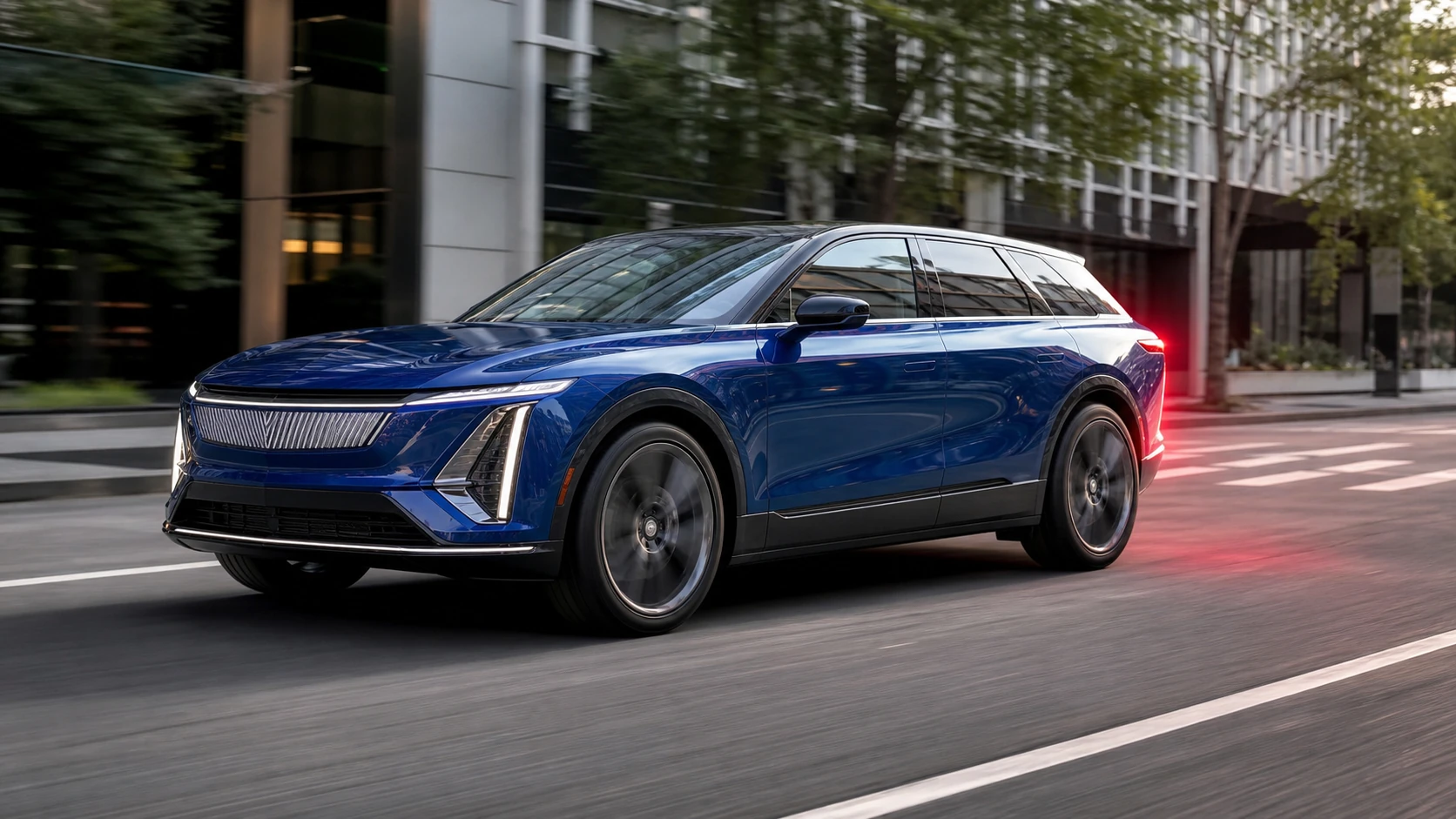
The Lyriq offers features such as One-Pedal Driving and Regen On Demand. These systems can reduce reliance on the conventional friction brakes and may improve efficiency in stop-and-go traffic when used smoothly.
Regeneration cannot recover all the energy used during acceleration. Energy is lost through the battery, motors, electronics, tires and other systems. Accelerating hard and then relying on strong regeneration is less efficient than avoiding unnecessary acceleration in the first place.
The strongest regenerative setting is not always the best choice for every road. On an open route, maintaining momentum can be more efficient than repeatedly slowing and accelerating. On slippery surfaces, drivers should follow Cadillac’s safety guidance rather than selecting aggressive deceleration solely to recover energy.
Why a Full Battery Can Reduce Regeneration
A battery charged to 100 percent has limited room to accept additional energy. As a result, regenerative braking may be reduced shortly after departure because the system has nowhere to store much of the recovered electricity.
This can be especially noticeable when a trip begins with a long downhill section. The vehicle may rely more heavily on friction braking until the battery’s state of charge falls enough to accept stronger regeneration.
Cadillac generally presents an 80 percent charge limit as suitable for routine daily use, while a higher limit can be selected when additional range is needed for a longer journey. Starting below full charge can also leave room for energy recovered during downhill driving.
Charging to 100 percent before a road trip is not automatically a mistake. The driver must balance the value of maximum starting range against the temporary reduction in regenerative capacity.
Factors That Affect Range More Than Driving Mode
Highway Speed
Speed is one of the largest influences on electric-vehicle range. The faster the Lyriq travels, the harder it must work against aerodynamic resistance.
A long highway trip at 75 or 80 mph can consume more battery than a slower journey in Sport Mode. Even in Tour, sustained high speed may lower efficiency sharply.
Reducing cruising speed by a modest amount can produce a clearer range benefit than switching between Tour and Sport while maintaining the same fast pace.
Acceleration Style
Rapid acceleration requires high electrical power. Repeated hard launches from traffic lights or strong bursts during overtaking can reduce range quickly.
Sport makes that performance easier to access, but the same energy demand can occur in Tour if the accelerator is pressed deeply. The mode changes sensitivity, while the driver determines the final power request.
Smooth acceleration remains one of the most reliable ways to control battery use.
Temperature and Climate Control
Cold weather can reduce battery performance and increase cabin-heating demand. Very hot weather can also raise consumption because the air-conditioning system and battery cooling system require energy.
Preconditioning the cabin while the vehicle remains connected to a charger can reduce the amount of battery energy used after departure. Heated seats may also use less power than heating the entire cabin to a high temperature.
The weather-related difference can be much larger than the difference between driving modes.
Hills and Road Conditions
Climbing requires additional energy because the motors must move the Lyriq against gravity. Regenerative braking can recover some energy on the descent, but it cannot return everything used during the climb.
Wet roads, snow, slush and rough surfaces increase resistance. Strong wind can also raise consumption, especially at highway speeds.
Drivers comparing modes should use the same route under similar conditions. Otherwise, the result may reflect terrain or weather rather than the selected setting.
Tires, Wheels and Pressure
Tire pressure affects rolling resistance. Underinflated tires require more energy to move and can reduce efficiency regardless of the driving mode.
Wheel size and tire design may also influence the official range of a particular Lyriq configuration. Larger wheels or performance-oriented tires can carry an efficiency tradeoff.
Owners should use the tire pressure listed on the vehicle’s information label rather than the maximum figure molded into the tire sidewall.
Passengers, Cargo and Towing
Additional weight raises the energy required for acceleration and hill climbing. Cargo carried outside the vehicle can also increase aerodynamic drag.
Towing can cause a major reduction in range because the Lyriq must move extra mass and push a larger shape through the air. No software mode can remove that physical demand.
Drivers planning to tow should use conservative range estimates and allow a larger charging buffer than they would during normal unladen driving.
The Lyriq-V and Performance Modes
The Lyriq-V expands the model line with greater power and performance-oriented controls. It includes features such as V-Mode, Velocity Max and Launch Control, allowing drivers to access stronger acceleration and configure performance settings.
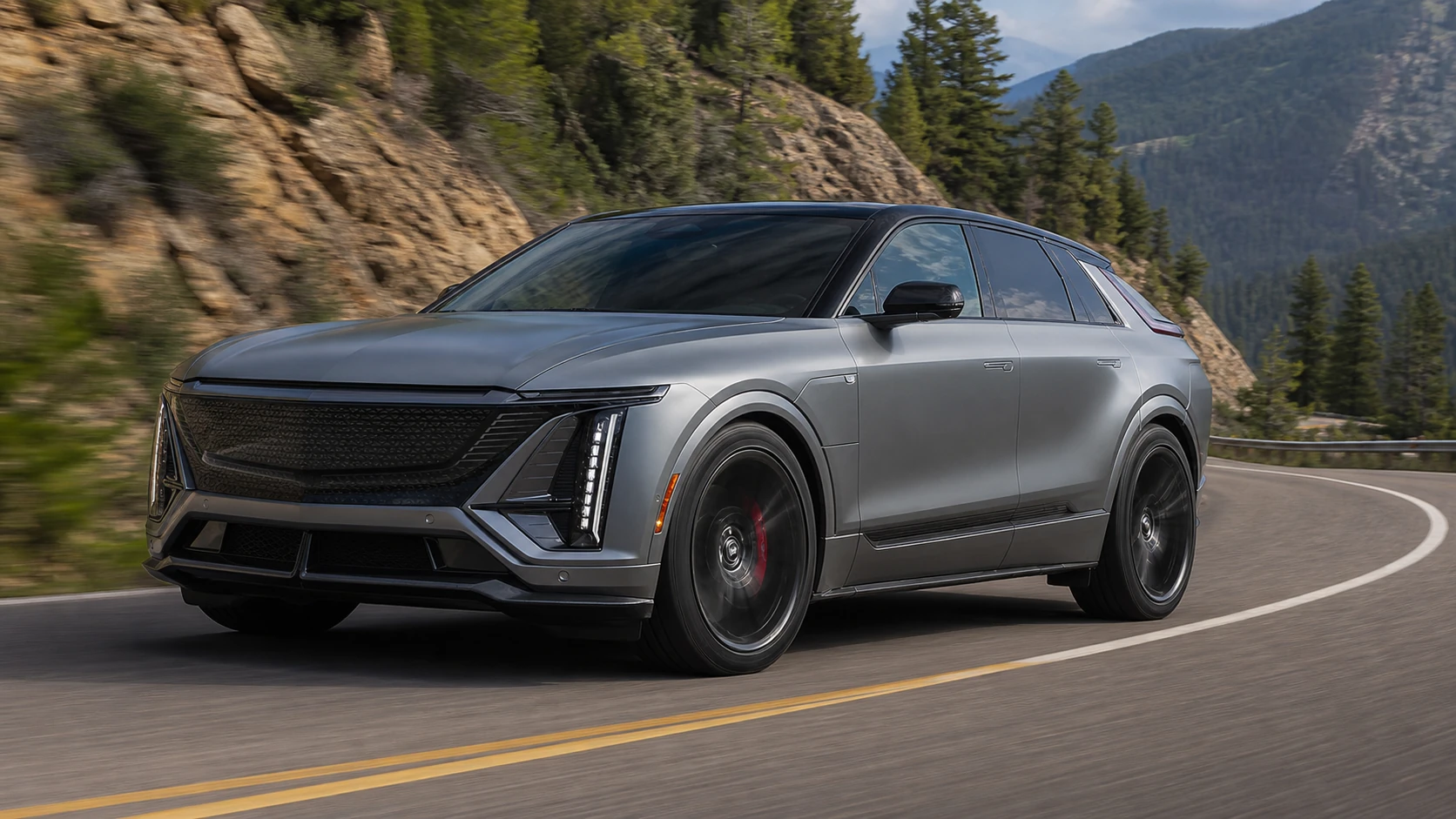
These features do not change the battery’s physical capacity. Activating Velocity Max does not instantly remove a fixed number of miles from the display, but using the available performance repeatedly can increase consumption quickly.
The Lyriq-V has a lower official range than the longest-range standard Lyriq configurations. That difference reflects the complete performance package, including its motors, tires, tuning and output, rather than one mode selected during a trip.
Drivers buying a Lyriq-V are choosing stronger performance with an expected efficiency tradeoff. Gentle driving can still preserve range, but regular use of its full acceleration will draw energy more rapidly.
How Owners Can Compare Battery Usage
The most useful way to compare modes is to monitor energy efficiency over repeated drives. Estimated remaining miles can fluctuate too much to serve as the only measurement.
A driver can use the same route several times in Tour and then repeat it in Sport. The tests should begin at a similar battery temperature and state of charge, with similar cabin settings, tire pressure, passenger load and traffic conditions.
Average electricity consumption should be compared over multiple journeys rather than a single trip. Wind, traffic lights and temperature can easily create a larger variation than the drive mode itself.
Drivers should also compare city and highway results separately. Accelerator mapping may matter more in urban traffic, while speed and wind resistance tend to dominate highway consumption.
Choosing the Best Mode for Each Situation
Tour is the clearest choice for daily driving and long journeys. It provides smooth responses and makes consistent accelerator inputs easier, which can support stable range estimates.
Sport suits drivers who want quicker response and a more connected steering feel. It does not need to be avoided completely, but drivers seeking maximum range should use its acceleration carefully.
Snow/Ice belongs on slippery roads where controlled torque delivery matters more than energy savings. Winter drivers should keep a larger battery reserve because temperature and road conditions can reduce range.
My Mode is suitable for owners who want a personalized setup. A gentle accelerator configuration may support efficiency, but there is no official My Mode range figure.
Frequently Asked Questions
Do Cadillac Lyriq driving modes have different official ranges?
No. Cadillac does not publish separate EPA range ratings for Tour, Sport, Snow/Ice or My Mode. Official range varies by vehicle configuration rather than the selected driving mode.
Does Sport Mode use more battery?
Sport Mode can use more battery if its sharper accelerator response encourages harder acceleration or faster driving. It does not automatically consume a fixed additional amount of energy.
Is Tour Mode the best setting for maximum range?
Tour is usually the most predictable everyday setting because of its smooth response. Maximum range still depends more heavily on speed, weather, climate control, terrain and driving style.
Does Snow/Ice Mode save electricity?
Snow/Ice Mode is designed to improve traction by softening torque delivery. It may reduce energy wasted through wheelspin, but cold weather and snow usually increase overall consumption.
Can My Mode be configured for better efficiency?
A driver can select gentler responses that may support smooth driving, but Cadillac does not identify My Mode as an official efficiency setting. The actual result depends on how the vehicle is driven.
Does One-Pedal Driving increase range?
One-Pedal Driving can recover some energy during deceleration and may help in city traffic. It cannot recover all the electricity used during acceleration, so smooth driving remains more efficient than repeated speeding up and slowing down.
Why does the range estimate change after switching modes?
The displayed range is a prediction based on stored energy and expected consumption. If a new mode changes acceleration, speed or recent driving behavior, the vehicle may revise its estimate even though battery capacity has not changed.
Conclusion
The Cadillac Lyriq’s driving modes change its character, not the size of its battery. Tour, Sport, Snow/Ice and My Mode all draw from the same energy supply, and none carries its own official range figure.
Their effect becomes visible through driver behavior. A responsive mode may encourage stronger acceleration, while a gentler mode may make smooth inputs easier. That influence is real, but it is not a fixed or guaranteed range difference.
Drivers seeking the greatest distance should focus first on moderate speed, gradual acceleration, sensible climate settings, correct tire pressure and realistic planning for weather and terrain. Those choices usually matter more than the name of the selected mode.
The most accurate answer will come from the owner’s own efficiency data. Repeated trips under similar conditions can show whether a preferred mode changes battery use in a meaningful way for that vehicle, route and driving style.